
The Only 4 Proven Ways Rich People Turn $1,000 Into $10,000 Fast
“I went from making four figures a month to five figures a month.” — Alex Hormozi
Imagine this: we hand you $1,000 and one rule — turn it into $10,000 in 30 days, or you keep nothing. How would you do it?
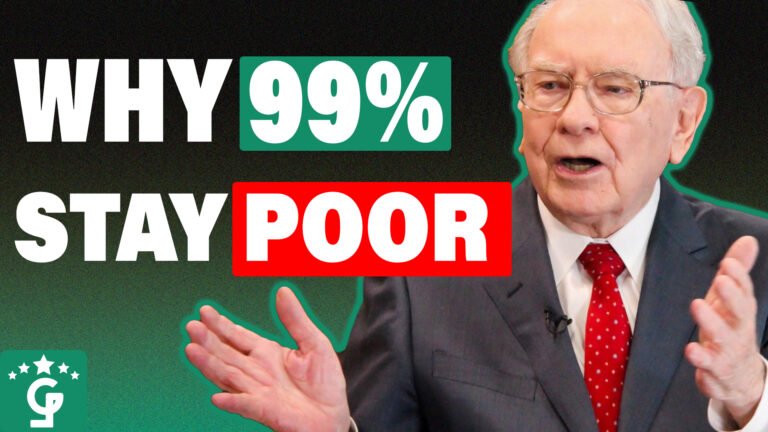
That’s the 10x playbook of the rich you’ll need. You’re about to find out exactly how — and why 99% of people guess wrong. There are four moves. Most people skip the first one and wonder why nothing works.
Once you understand this, taking $1,000 to $10,000 stops feeling random. $100 to $1,000 starts to click. $10,000 to $100,000 starts feeling like a game plan.
Then $1,000,000 is no longer a fantasy — it becomes a process. That’s the difference between hoping for luck and building a system you can use and repeat in your 20s, 30s, and beyond.
So here are the 4 proven ways rich people 10x their money fast (and how you can copy the 10x playbook). This is Genie Finance.
The top 1% are not smarter than you. They are not luckier than you. They just play a different game.
Most people start, hit friction, and quit right before the payoff shows up. By the end of this piece, you’ll know why that happens — and how to avoid it.
Way #1: Protect Your Time — The Asset You Cannot Buy Back
Time is the only asset you cannot earn back. Think about your last raise — maybe 3%, maybe 5%. Feels good for a week.
Then rent, food, gas, and bills swallow it whole. You worked harder. Your paycheck went up a little, but your life barely moved at all.
And that’s the trap.
65% of people in America are living paycheck to paycheck right now. It doesn’t mean you’re lazy. You’re playing a game that was not designed for you to win — unless you know these 10x moves.
That’s why the first win is not more hustle. It’s this: choosing one thing that makes your next hour worth more than your last hour.
Here’s the actual number behind this. Morgan Housel calculated in his book, The Psychology of Money: if Warren Buffett had started investing at 30 instead of 10, his net worth would be around $11.9 million — not $150 billion today.
150 billion versus 11.9 million. Using the exact same strategy. Just different starting time. That’s the cost of not protecting your time.
Rich people figure out early on that TIME is the one input you cannot scale by grinding harder. You can make more money. You can hire more people.
But you cannot make more hours. So instead of spending more time just working harder, the rich mostly spend their time on what raises the value of the next hour:
- A book
- A mentor
- A skill
- A system
Watch the full clip: Graham Stephan — Invest As Soon As You Can
“First, it’s investing as soon as I could. Now, I got to say, from all of the general advice out there, this could easily be the most impactful in terms of how much wealth you’re able to build throughout your lifetime, because even though it might sound super basic to some people, the reality is that most will never follow it. They’ll continue to deprioritize investing and focus on other expenses instead, or more commonly, is that they’ll just think that they have their entire lives ahead of them to invest, so what difference would it make to wait another few weeks, months, or years anyway? Well, fine, I’m not going to lie. Waiting a few extra weeks or months is probably not going to be that big of a deal in the long term, but I will say the type of person to continually put things off and postpone things is probably the same type of person who never actually gets around to doing something until eventually it’s too late. And here’s the thing, when you’re young, one of the biggest advantages that you have when it comes to investing is really simple. It’s just time.” — Graham Stephan
How much you earn doesn’t increase by accident. It grows when you intentionally build it. And you don’t need a huge budget when starting out.
The free resources that can be your starting line:
- Free courses
- YouTube videos
- Communities
- Podcasts
- Taking action one step at a time
That’s why a YouTube video that changes your next five years beats a paid course that changes nothing. The smartest move is not always the most expensive. It’s the move that buys back your time.
Protect your time like it is money. Because it literally is — if not more valuable than money itself.
The $1,000 move to get you to $10,000 here is not a stock. It is an investment in yourself: a $500 course that earns you a raise in 60 to 90 days, a cash-flowing business, a tool that saves you 5–10 hours a week. Anything that raises the value of every future hour you work.
You’re not buying things. You’re paying for the version of you that exists six months from now. Everything else in this piece compounds on top of this.
If you want a full breakdown of the most valuable assets to build in your 20s and 30s — drop “time” in the comments right now. If this article hits 100 comments on that word, that piece goes up next.
Way #2: Multiply With Leverage — How Rich People Stop Trading Hours for Money
About 70% of the billionaires on the Forbes list are self-made. They didn’t have a head start. They built the machine.
And what separates their machine from everyone else’s is using leverage — not hard labor. Leverage is the move that lets you stop trading your life for paychecks.
Warren Buffett is not personally picking every stock. Jeff Bezos did not pack every Amazon box.
Rich people figured out there are four types of leverage — and they use them together:
- Time leverage — other people’s effort working toward your goal
- Capital leverage — money making money even while you sleep
- Code leverage — software doing the work 24/7
- Content leverage — one idea reaching thousands, or even millions of people through media
Watch the full clip: Alex Hormozi — The Types of Leverage
“So when I went from being an employee to self-employed, I went from making four figures a month to five figures a month. And that was for me just like, I’m now in control. The level above that was I started having other people who worked for me. I didn’t even know that was possible. Sounds crazy. But like, I was like, ‘You can hire people?’ Because my members of my gym were like, ‘You know, other people can work here.’ I’m like cleaning the floor and doing the marketing and teaching class. They’re like, I was like, ‘Didn’t think about that. Good call.’ (Bottleneck.) Right, and then went to six figures a month, right? And then from there, stayed there, did the turnaround business, still had the same organizational structure, had another degree of leverage. And so the next degree of leverage was that I started licensing. So it was digital, right? So the cost of goods was basically nothing. And then that’s when things started skyrocketing. That got me to seven figures a month. And then eight figures a month was using leverage through capital, which is where we’re at now. And I would imagine that nine figures a month will probably be some level of technology or more media on my side. But all of these things are about leverage.” — Alex Hormozi
4 figures → 5 → 6 → 7 → 8 figures per month. Each jump was a new leverage step. That’s how Naval Ravikant — who has invested in Uber, Twitter, and dozens of unicorns — distills all four of those levels into one core idea: earn with your mind, not your time.
That last one — media — is right here. One video, one post, one idea can reach millions, more people than you could ever meet one by one.
That’s why one viral clip can outwork a whole week of doing random tasks.
Rich people aren’t trying to do more. They are building the things that do more for them. That’s why most people feel busy but stay broke — their calendar is full, but their output is not multiplied. They’re just running faster on the same treadmill.
The $1,000 leverage move to get you to $10,000 fast: build something once. A template. A system. A piece of content. Something that works without you being in the room.
You’re not hiring a team today. But you can build a digital asset. That is your first leverage step.
- If a system can answer questions, sell, teach, or deliver without you being in the room — that’s leverage
- If an asset keeps working while you sleep — that’s leverage
- If one decision pays off for years — that’s leverage
But leverage cuts both ways. Debt can multiply the upside, but it can also multiply the downside.
If you don’t know what you’re amplifying, you’re not building wealth. You’re speeding up a mistake.
The rich do not ask, “How hard can I work?” What they actually ask is: “What can work without me?”
Most people stay stuck in the one-hour-for-one-dollar trap. Leverage breaks that math.
And this is exactly what we break down in the Genie community emails — how to build your first actual leverage step when you’re just starting out, and stop trading time for money. To join, link is below.
Way #3: Stress-Test Your Bet — The Smart Way Rich People Bet Big
Let’s address something head-on. When most people hear “bet,” they immediately think gambling. It’s not gambling.
Here’s the difference:
- Gambling = pure probability
- A structured bet = controlling the downside before you put a single dollar in
One is roulette. The other is architecture. The top 1% are architects, not gamblers, and here’s how they build the structure.
Not every big bet is actually a smart bet. The right one has limited downside and unlimited upside.
Most financial advice tells people to diversify, and the truth is, that protects you from disaster. But early on, the top 1% often do something different: they concentrate their bets.
- Elon Musk split his PayPal fortune between Tesla and SpaceX
- Mark Zuckerberg bet early on one idea (Facebook)
These stories are famous because the upside was massive.
But here is the part some people miss: for every huge win, there are thousands of people who made the same kind of bet and lost. This is survivorship bias — you only hear the victory speeches, not the silent wipeout.
What made the good bets different was not just concentration. It was structure:
- Limited downside
- Unlimited upside
- Actual knowledge of the space
- A risk you can survive if everything goes wrong
A real structured bet should still let you sleep at night. So ask yourself these three questions before getting in:
- Do I understand the downside completely?
- Even if this fails, can I survive it?
- Is the upside actually real — or am I just hyped?
If you can actually answer YES to all three, concentration can be powerful. If you can’t, then you’re not being bold — you’re being reckless.
Here’s a real example. Say you want to put $1,000 into a specific ETF you’ve been following for years.
First question: do you actually understand the downside? Maximum loss is just the $1,000. Yes.
Question two: if this fails completely, can you survive it? If losing $1,000 doesn’t wipe you out — yes.
Question three: is the upside actually real, or are you just hyped? You’ve done the research — not Reddit hype, your own research. Yes.
Three yeses. That’s the structure, not a gut feeling. Start out by stress-testing your bet, then move with conviction.
Which of those three questions is the hardest one for you right now? Drop it in the comments.
Way #4: Ownership Compounds — The Only Side of the Game That Compounds
Salaries can rise. Ownership can compound.
Does your income actually compound? A salary usually does not — next month, it’s the same paycheck unless you negotiate or change jobs.
Ownership is different:
- A business
- An asset
- Equity in something that grows
That is where compounding happens. Graham is going to use a word in this clip that sounds like a joke — but pay attention.
Watch the full clip: Graham Stephan — On Compound Interest
“You could also take full advantage of what’s called compound interest. This means that the money you invest continues to grow to faster and faster rates, because that money makes you more money, which then makes you even more money, which makes you more money until pretty soon, you have a billion quadrillion gazillion dollars. That’s why now you have a choice to make. You can either use this information to make you money or you could ignore it, and only time is going to tell how much that’ll cost you.” — Graham Stephan
With $1,000, the first step is either:
- Learning a skill
- Investing in a business
- Getting a small stake in something that can grow
And once you own something that works, scale is what turns it into a machine:
- One customer becomes ten
- Ten becomes a hundred
- One location becomes five
- One piece of content becomes a catalog
You are not starting over every single month. You are building something that gets stronger because it exists. When you own the engine, you stop renting the result.
Watch the full clip: Alex Hormozi — The Best Businesses to Start
“The best businesses especially in an inflationary period are businesses that have low capital expenses. (Okay. And that’s because if — you have examples? Yeah, yeah.) So I’ll give you opposite examples to make and then I’ll drive it. So something that does have high capital expense, which is what you would not want to get into, would be like stuff that has lots of inventory, stuff that has lots of supply chain, lots of manufacturing, heavy equipment — things where you have to constantly buy more stuff in order to increase capacity, right? A low capital expense business are things like services, right? Services, digital businesses, software is mixed because sometimes the development team can be considered a capital expense — it really depends on how you build the dev team. But the idea is that if you can produce 10 times more units without phenomenally changing the cost basis, then you will have a business that has lower capital expenses. And so that’s what you like, and most of those types of businesses produce more cashflow, have more pricing power. And so I mean, that’s what Warren Buffett invests in.” — Alex Hormozi
This is the kind of move that can 10x your next few years, not just your next paycheck. That’s how money starts working like a system for you.
Protect. Multiply. Bet. Own.
Now you know the 10x playbook the top 1% quietly follow. The four ways rich people 10x their money:
- Protect your time
- Multiply it with leverage
- Concentrate it into one strong bet you’ve actually stress-tested
- Own the result and let it compound
Gary Vee’s closing point here is short. It is the one sentence we want you to walk away from this piece with.
Watch the full clip: Gary Vee — Execution Beats Knowledge
“But I’m a big fan of doing. You can’t read about pushups. People love to use strategy as a disguise for non-action.” — Gary Vee
How many times have you sat with an idea, understood it, and then just — waited? That ends today.
The 1% are not doing one big thing. They are stacking these four small advantages until the gap becomes impossible to ignore. Start with one. Lock it in. Get results. Then stack the next.
Here’s your final action step: pick one of the four — time, leverage, structured bet, or ownership. And comment it below right now. That comment is your public contract; hold yourself to it. Build that one before you chase the next one.
Don’t miss the next piece — we’re breaking down Robert Kiyosaki’s #1 rule for never being broke again. You’ll need that rule once you start making more money.
Genie Finance: The Guide to Future Success. Far From Conventional.